On this page +
Game overview
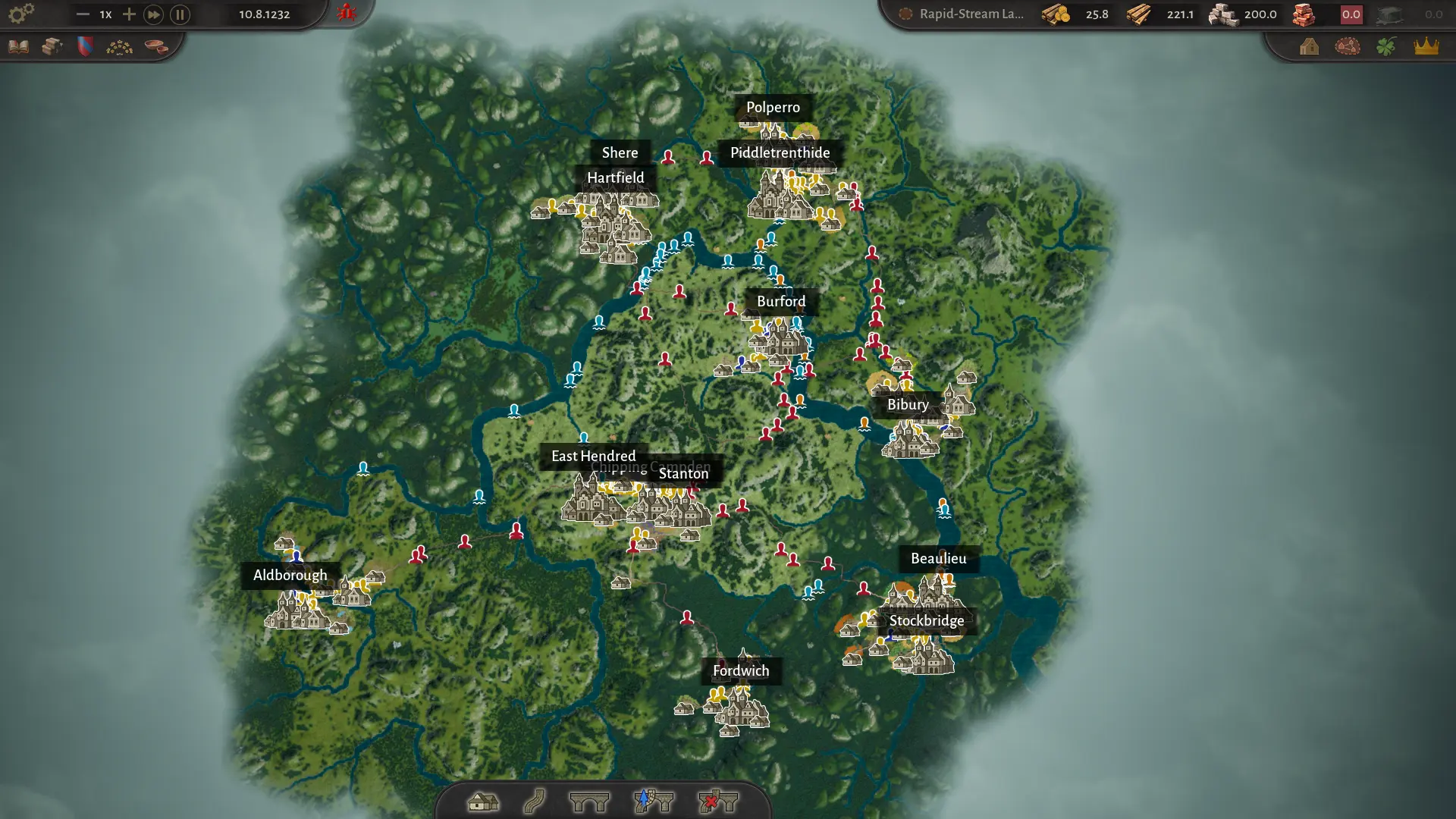
County of Fortune is a medieval county-building game from Nepos Games and Aquila Interactive. It takes the familiar loop of a city builder and zooms out: you place whole settlements, connect them into a regional economy, then govern the mayors, noble houses and cultures that emerge.
If you enjoy Foundation, Manor Lords or Farthest Frontier but want more emphasis on regional logistics and political systems than on a single town, County of Fortune is aimed squarely at you.
What is County of Fortune?
You play as a lokator, a medieval colonizer and noble steward who has been given a blank stretch of kingdom. Your job is not to draw every house. It is to choose where settlements go, what each one becomes and how the whole county fits together.
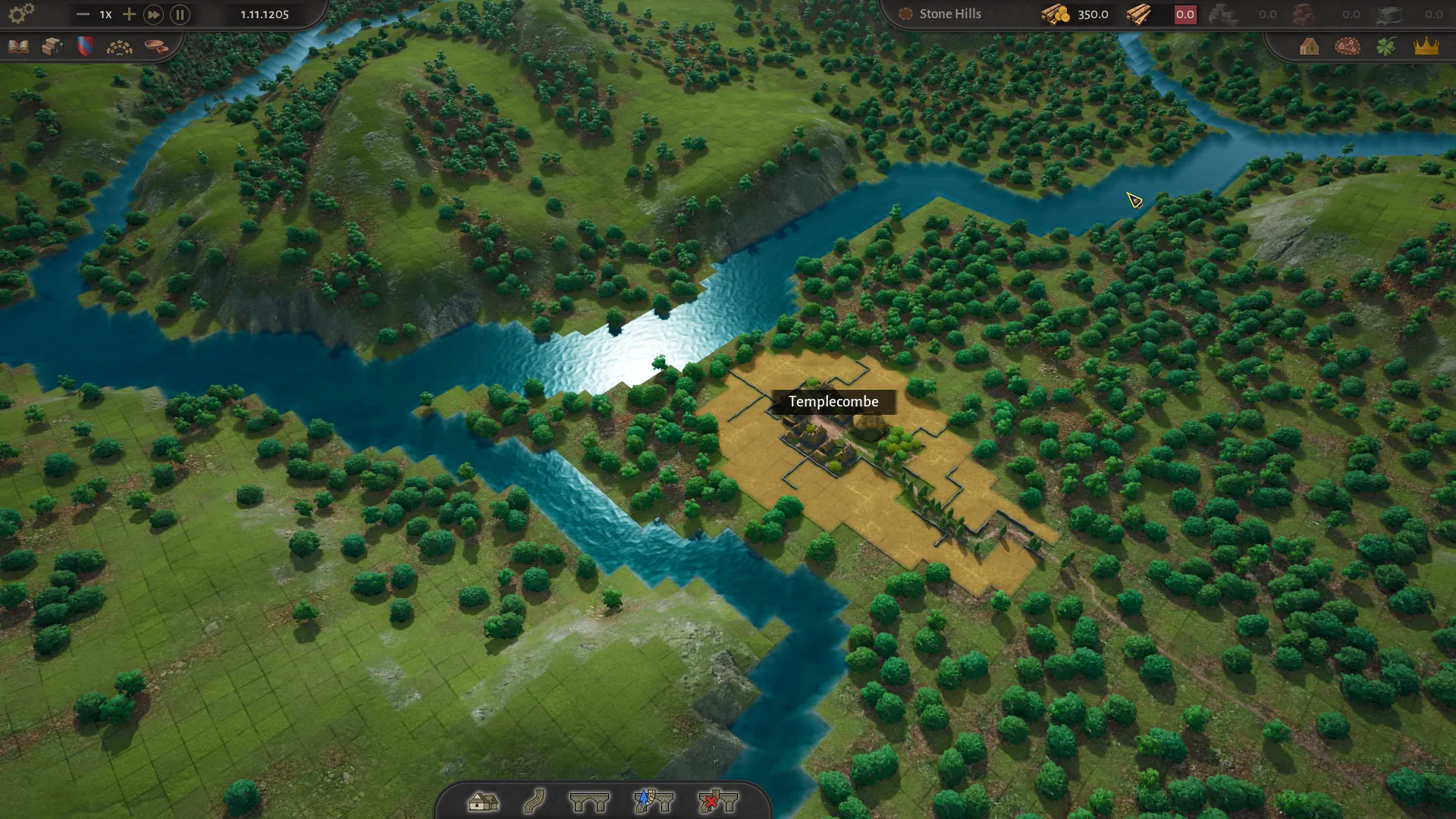
The official pitch is unusually direct: build an entire medieval county, not just one town. Settlements are laid out on a medieval grid and then grow procedurally, street by street. A village can become a town and eventually a city, but its character is decided by the land around it and the production chains you build inside it.
County of Fortune releases into Steam Early Access on . A free demo is already available and its progress carries into the full game. See the release date page for platforms, price status and launch timing.
The core gameplay loop
A county develops in a repeating cycle. The exact pace changes with the map, but the shape is consistent:
- Found a settlement. Pick a site with the resources, soil or river access the settlement will need. Choose its starting building and direction.
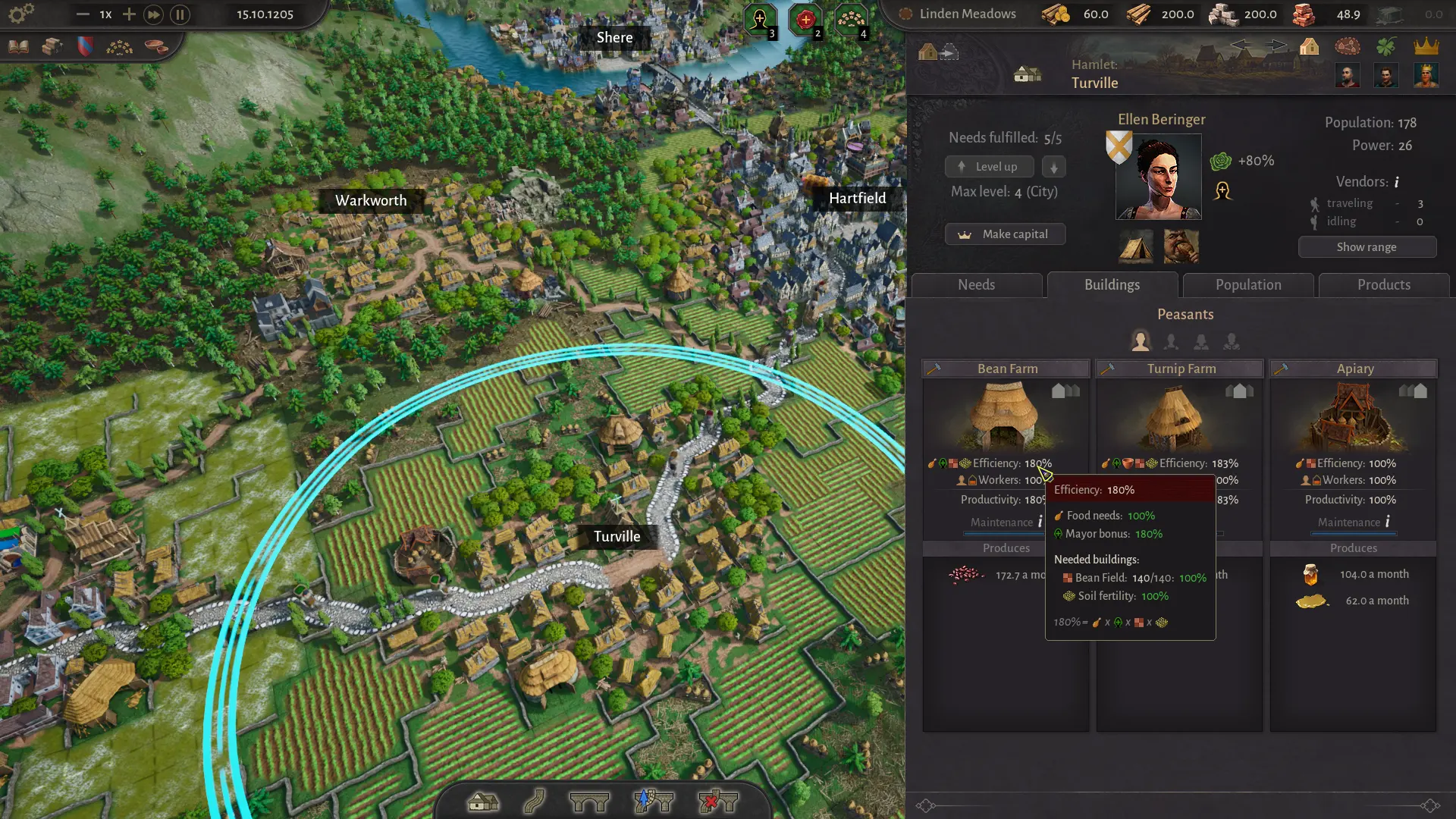
- Supply its needs. Food and equipment keep people working. Satisfying those needs unlocks building slots and eventually a level-up.
- Specialise production. Use the surrounding land to decide whether a settlement makes food, timber, stone, clay, wool or a refined good.
- Connect the region. Roads, bridges, markets and raft ports move goods between settlements. Heavy goods generally need water.
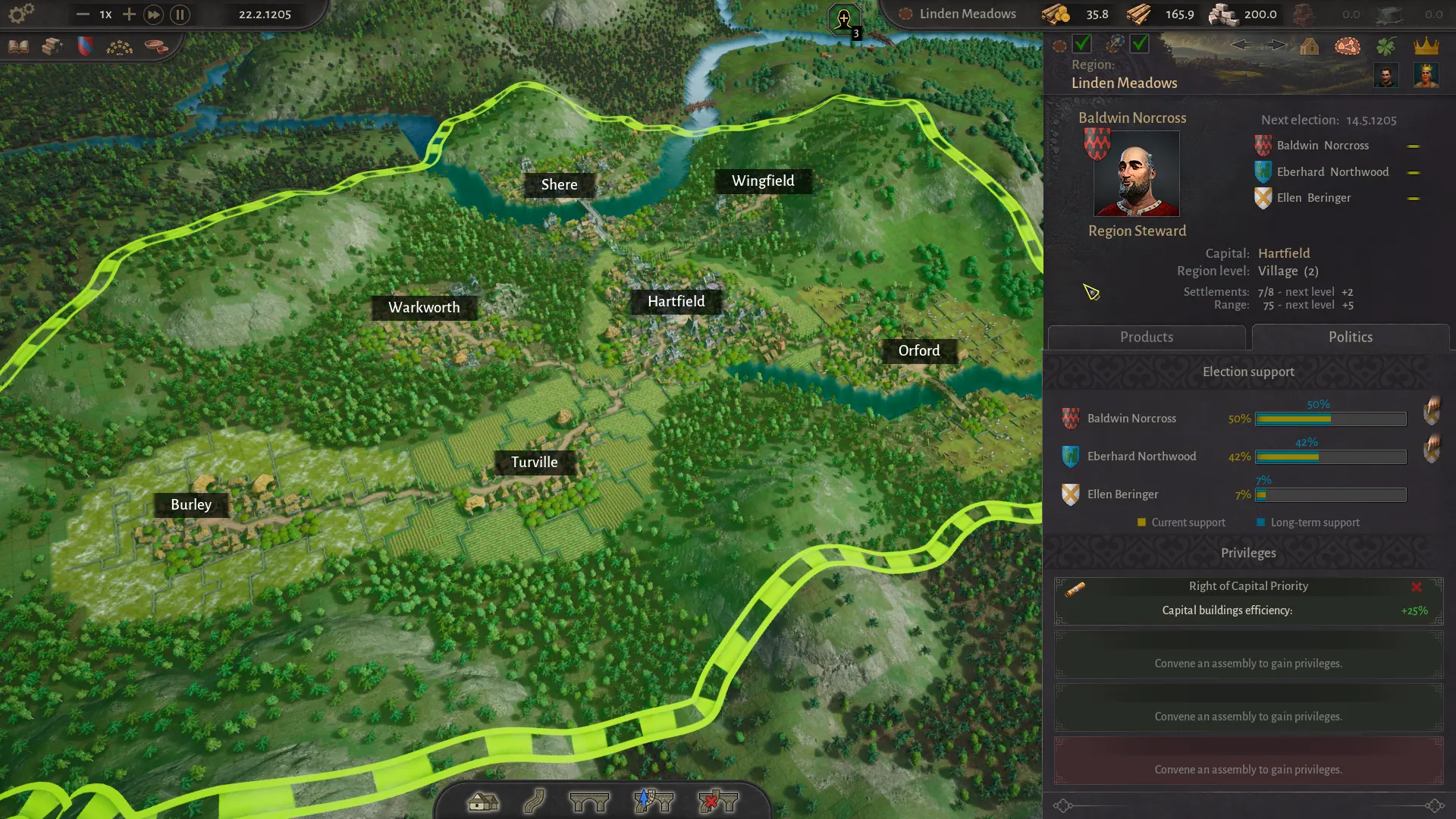
- Add people and politics. Appoint mayors, manage noble-house influence and use the Assembly to win regional privileges.
The loop is deliberately broad. You can spend a session optimising one production chain, or step back and redraw the political map of the county. The beginner guide walks through the first full cycle step by step.
Settlements, not streets
The scale is the point. You are not zooming into a single town to place a blacksmith two tiles from a house. You are zooming out to see a whole county come to life, with settlements that have their own names, mayors and identities.
That does not mean the game is abstract. Settlement placement is constrained by terrain: fertile land for crops, deposits for stone or clay, coastline for coastal buildings and enough buildable area to support a high maximum level. A settlement placed on a tiny stone patch may simply refuse to exist, even if the surrounding grass looks inviting. The settlements guide covers the placement rules in detail.
| Scale | You decide | The county handles |
|---|---|---|
| Region | New regions, stewards, capital, trade partners, Assembly votes | Regional level, settlement limit, political support |
| Settlement | Site, starting building, production buildings, mayor, needs | Street layout, building placement, population growth |
| Building | Which recipe or production to run, worker priority | Efficiency, maintenance, local deliveries |
| Goods | Production chains, storage, trade routes | Vendor movement, river transport, market distribution |
A regional economy, not a single market
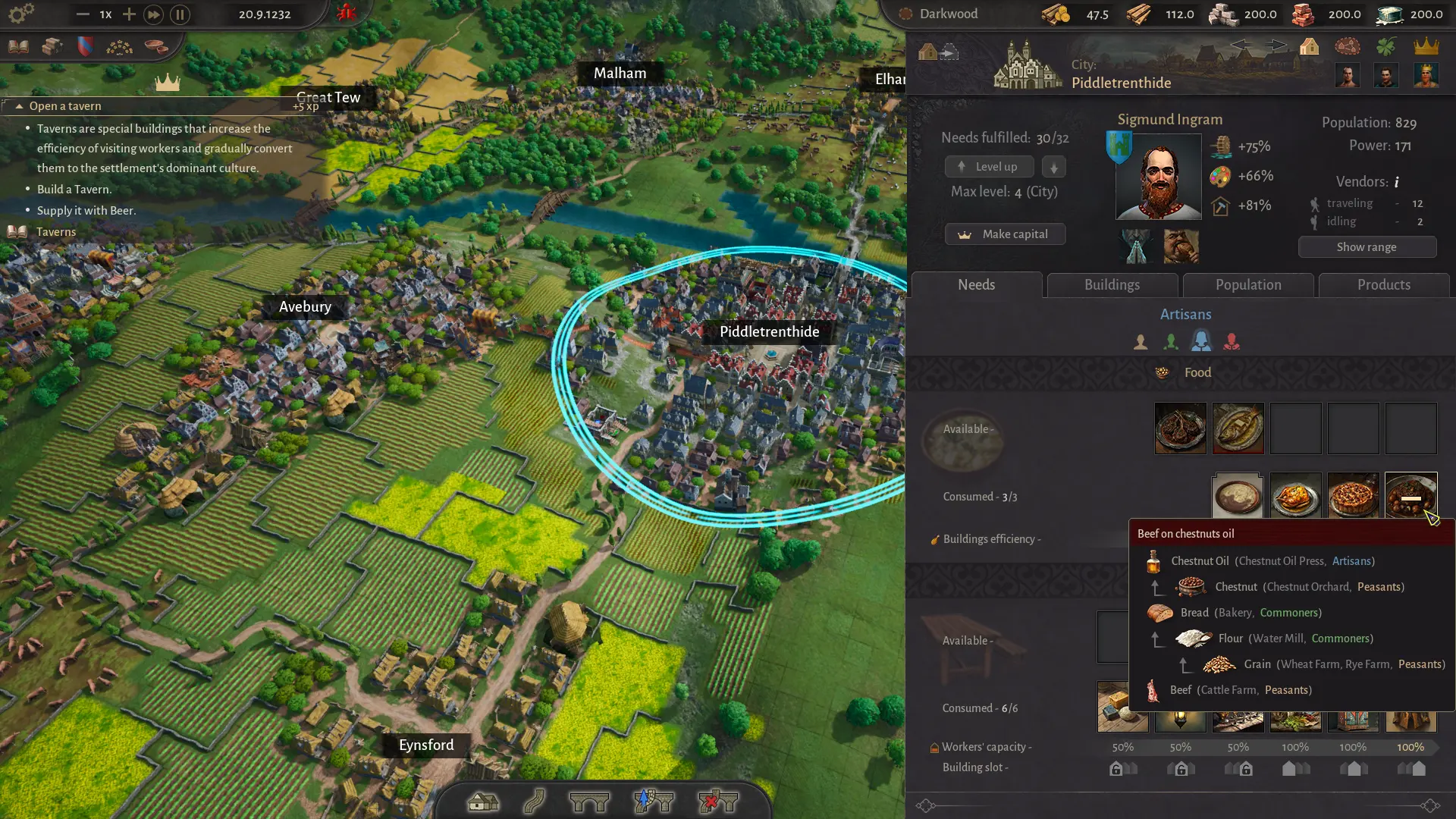
County of Fortune’s economy is wide and layered. Raw materials are refined into advanced goods across real production chains, and settlements specialise based on what the surrounding land offers. A settlement with good clay becomes a pottery or brickmaking hub; a forest settlement supplies logs and carpentry points; a farming settlement feeds the region.
Goods move on their own once the infrastructure exists. Wagons, carts and river vessels carry products between settlements, and better-supplied settlements evolve, attracting advanced workers and unlocking new goods and buildings. You tune the system, then watch it breathe.
The practical consequence is that transport is part of production. A workshop with no input is not producing, even if the building card shows a theoretical maximum. The production guide and resources reference explain how to trace those gaps.
Check the input, not the output. If a workshop is idle, hover its production chain and confirm that the missing good is actually being made somewhere in the region, stored, and able to reach the settlement by road or river.
Mayors, noble houses and cultures
Once the county matures, a second game begins. Each settlement is run by a named mayor with their own traits and production bonuses. Every mayor belongs to a noble house, and rival houses weave politics across the region. Migrating cultures bring customs that grant bonuses, create tensions and give settlements a cultural identity.
These are not cosmetic layers. Mayor bonuses change building efficiency, house influence shapes elections and Assembly proposals, and a culture’s population share determines how strong its Traditional Product bonuses become. The mayors guide, noble houses reference and cultures guide go deeper.
Who is County of Fortune for?
It is for players who like the idea of a medieval builder but want the management layer to extend beyond one town. The game rewards long-term thinking: choosing a settlement site today because a river bends there, or tolerating a weaker mayor because their house will matter in the next election.
It is probably not for players who want direct military conquest or a tightly scripted campaign. The store description and demo keep the builder at the heart of play, with conflict expressed through land, economy and people rather than battles. If that sounds like a limitation, our similar games page lists alternatives with more warfare or survival pressure.
What state is Early Access in?
The developers describe the Early Access version as fully playable, with the core systems already in place: settlement and regional development, production and logistics, trade, cultures and noble houses. Early Access raises the settlement cap from level two in the demo to level four, adds the Artisan and Patrician classes, more than 40 new production buildings and over 50 new products, including ports and sailboats.
The planned Early Access period is approximately 6–9 months, with feedback shaping balance, performance and new features before the full release. See the roadmap page for the confirmed timeline and what is still unknown.
County builder vs traditional city builder
| Decision | Traditional city builder | County of Fortune |
|---|---|---|
| Placement | Place individual buildings and roads | Place whole settlements; internal streets grow procedurally |
| Economy | One market, local supply chains | Multiple settlements, regional production chains and transport |
| Geography | Mostly a buildable surface | Rivers, soil, elevation and deposits decide specialisation |
| People | Population as a number | Named mayors, noble houses, elections, cultures |
| Failure | Starvation, fire, bankruptcy | Broken logistics, political pressure, cultural tension |
If you are ready to try it, the free demo is the safest entry point, and the beginner guide will save you a few restarts. For a critical view of the current build, read our first impressions.
Quick answers
County of Fortune gameplay questions
Is County of Fortune a city builder or a strategy game?
It is both, with the emphasis on building. You found and grow settlements, but the decisions that matter most are regional: which settlement specialises in what, how goods move, which mayor runs each town and which noble house gains influence.
Do buildings appear automatically in County of Fortune?
Yes. You choose a settlement site and its direction, then procedurally generated buildings fill in street by street as the settlement grows. You still decide which production buildings to place and which needs to satisfy.
How many settlements can I build?
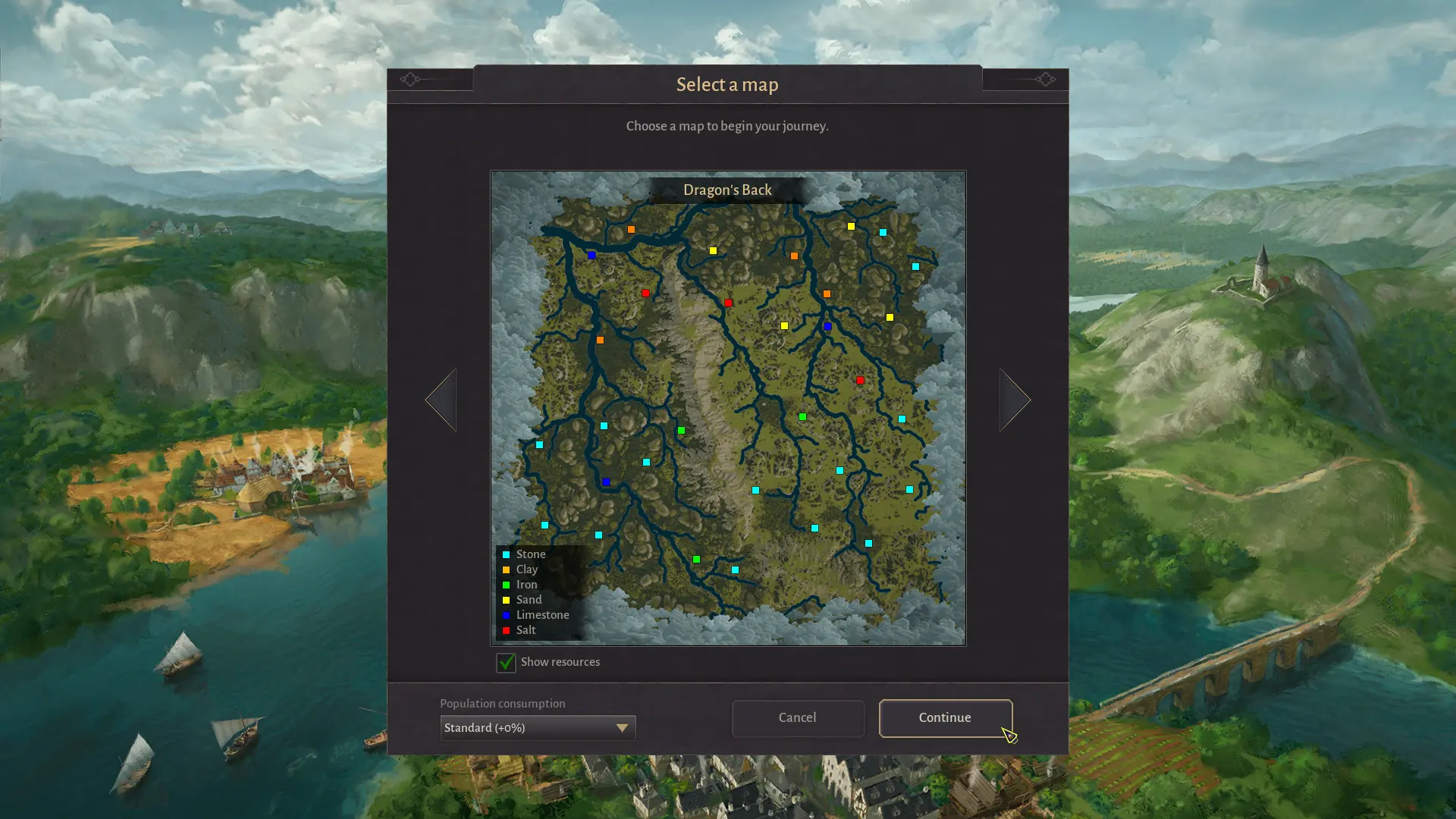
The cap is tied to the region and the land available. In the demo interface, a region shows a current settlement count against its limit and the next regional level increases it. Plan around the land you have rather than a fixed number.
Is there a story campaign?
County of Fortune is described as an open-world sandbox. The demo includes a guided tutorial and a single map, but no separate narrative campaign has been announced. Your county’s story comes from its mayors, houses and cultures.
Do I have to micromanage every building?
No. The design pushes you to tune a regional economy rather than a single market square. Vendors and river vessels move goods between settlements once roads and trade routes are set up, while mayors and production chains do much of the local work.
Sources & further reading
- County of Fortune on Steam — store description, features, system requirements and Early Access notes.
- Nepos Games — official County of Fortune page — feature overview and media.
- Aquila Interactive publishing announcement — developer, publisher and key features.
- County of Fortune Steam news hub — dev diaries, demo FAQ and Early Access details.