On this page +
Mayors guide
Mayors are the human layer of County of Fortune. Each settlement has a named mayor with a production bonus, a personality and a noble house. A well-matched mayor can lift a settlement’s output by a large percentage; a mismatched one wastes a slot that could be doing real work.
What mayors do
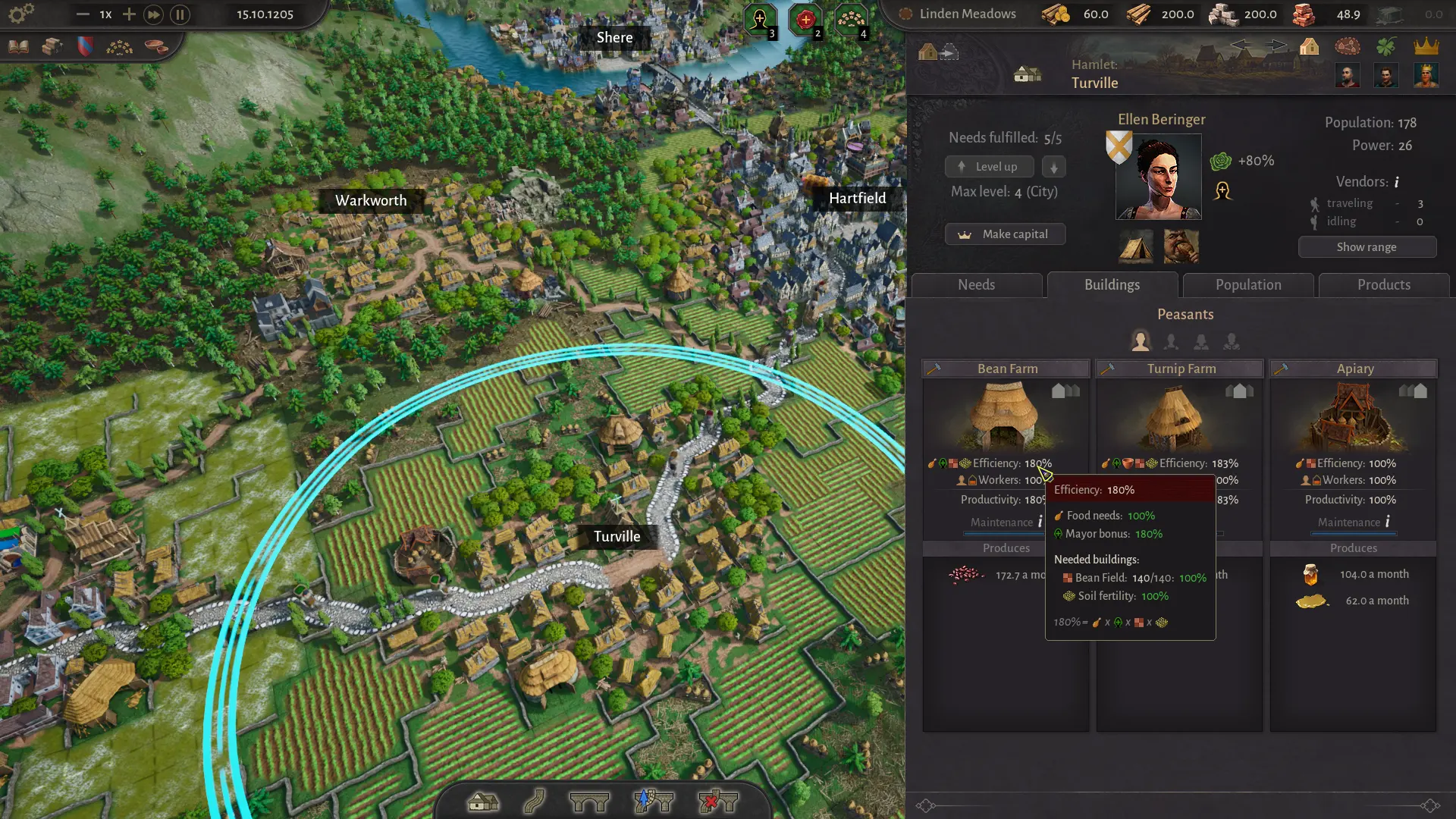
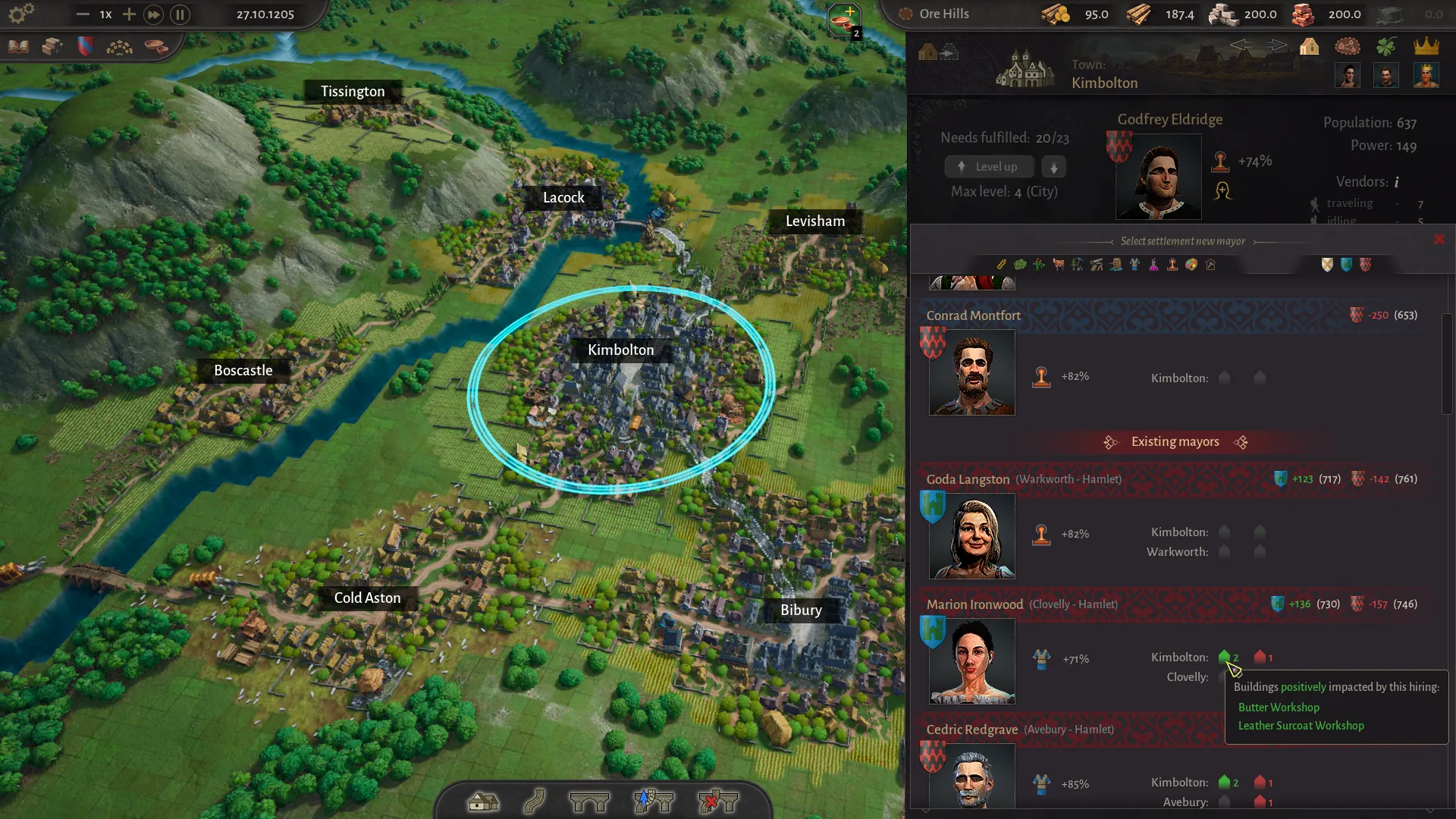
A mayor runs a settlement and provides bonuses to specific building types. The bonus is visible in the settlement panel and in the building efficiency tooltip. In the demo, bonuses are shown as percentages next to small building icons, and the game highlights which buildings a candidate would affect.
Mayors also belong to noble houses. That means the choice is never purely economic: appointing a mayor increases their house’s presence in the region and can influence elections, privileges and the balance of power.
After the August 2026 rebalance, mayors no longer have negative bonuses and swapping them no longer carries a penalty. The system is now about matching strengths to settlements, not avoiding traps.
Appointing and swapping mayors
- Open a settlement and click the empty or occupied mayor portrait.
- Browse the candidate list. Hover a mayor to see their bonus, cost and the buildings positively impacted.
- Check the “existing mayors” section. A mayor already running another settlement can be moved here; the comparison shows what each settlement gains and loses.
- Confirm the appointment. If you are hiring a new mayor, pay the listed cost; if you are moving an existing one, there is no swap penalty in the current build.
The UI merges new and existing mayors into one window, which makes comparison much easier than the original demo. Use the positive and negative impact indicators rather than the raw percentage alone: a +80% bonus to a building type the settlement does not have is worth nothing.
Do not spend time optimising mayors while a settlement is still deciding what it produces. Specialise first, then match the mayor to the buildings that actually exist.
Matching bonuses to settlements
| Settlement role | Look for | Why |
|---|---|---|
| Food settlement | Bonuses to farms, food processing or agriculture | Food is the settlement’s dominant output and the region’s lifeline |
| Logging / carpentry | Bonuses to wood, logging or carpenter’s guild | Compounds carpentry points as well as wooden goods |
| Quarry / masonry | Bonuses to stone, quarry or mason’s guild | Stone and masonry are persistent bottlenecks |
| Workshop town | Bonuses to the specific industry, not a generic percentage | A pottery bonus is wasted in a glassworks town |
| Trade hub | Bonuses to markets, ports or trade capacity if available | Improves the settlement’s role as a regional gateway |
| Capital | The strongest overall bonus and a useful house | Capital privileges can amplify the settlement further |
In the demo, a city mayor showed bonuses such as +75%, +66% and +81% to different building groups. Those numbers are large enough to change a settlement’s output materially, but only if the affected buildings are present and staffed. Check the impact list before you hire.
Mayors and noble houses
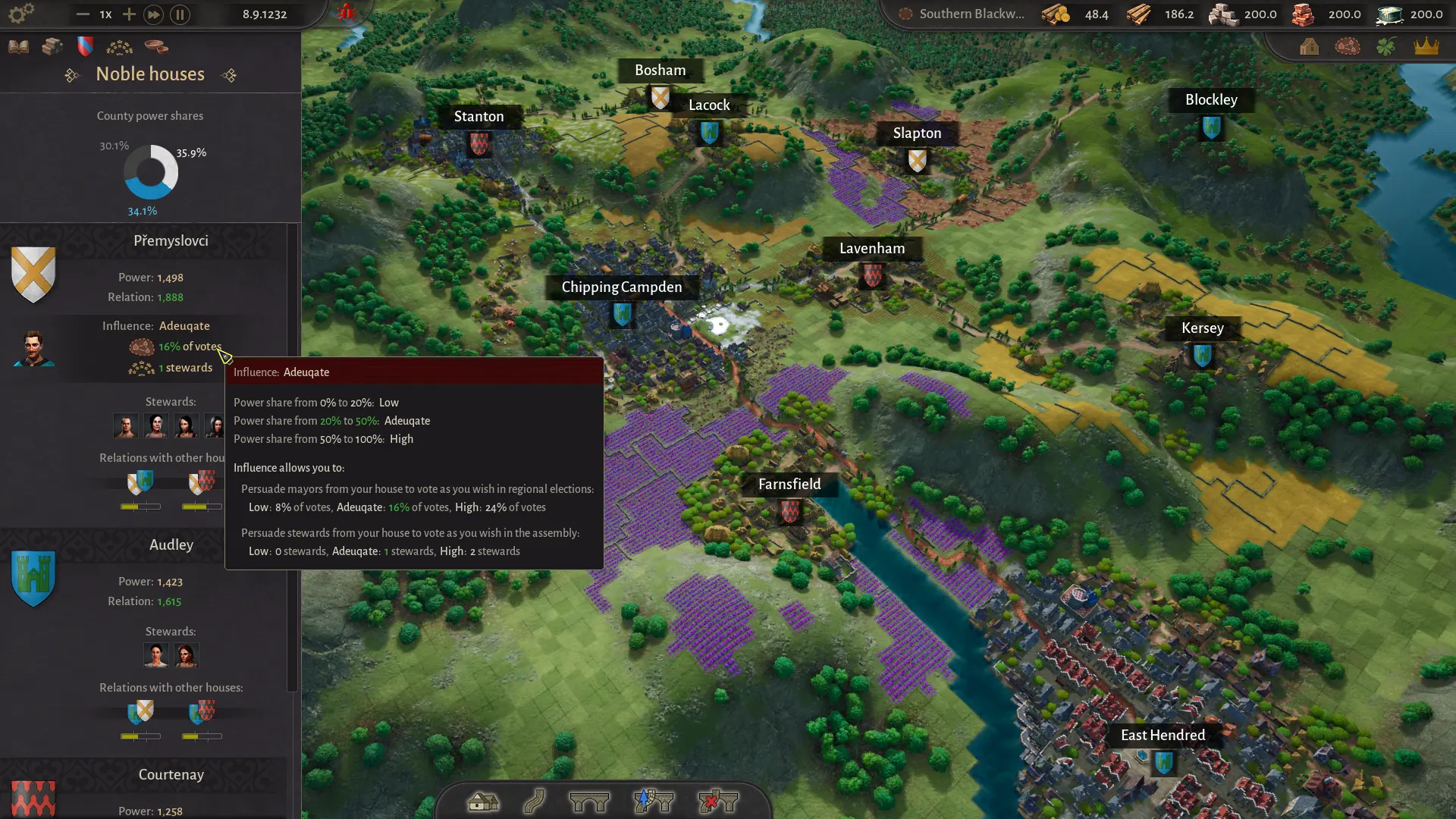
Every mayor belongs to a house, and houses accumulate power through the settlements their mayors run. Power translates into influence, votes and the ability to shape regional privileges. A house with high influence can push its agenda in the Assembly even if you did not appoint its mayors deliberately.
This creates a tension: the best economic mayor may belong to a house you do not want to strengthen. In the early game, take the production bonus. In the mid-game, consider whether a slightly weaker mayor from a rival house could balance the region politically. The noble houses guide explains power shares, influence and elections.
Some builds show mayor education points in the interface. These are a long-term investment in a mayor you intend to keep. Check the tooltip in your build before spending them; the system may change during Early Access.
How bonuses stack
Mayor bonuses are one layer of a settlement’s efficiency. They stack with:
- Input supply: a building with no input produces nothing, regardless of bonus.
- Worker count: more equipment raises the worker cap at level two and above.
- Recipes: additional valid recipes can raise efficiency.
- Culture bonuses: Traditional Products and population share add regional production bonuses.
- Privileges: Assembly decisions can boost capital efficiency, mayor bonuses or reduce consumption.
- Maintenance: a damaged road or under-maintained building can erase the gain.
The building efficiency tooltip is the source of truth. If a +80% mayor only moves the final number a little, another factor — missing input, low workers, maintenance — is capping the building.
Common mayor mistakes
- Hiring for the percentage, not the building list. A big bonus to a building type you do not have is a wasted slot.
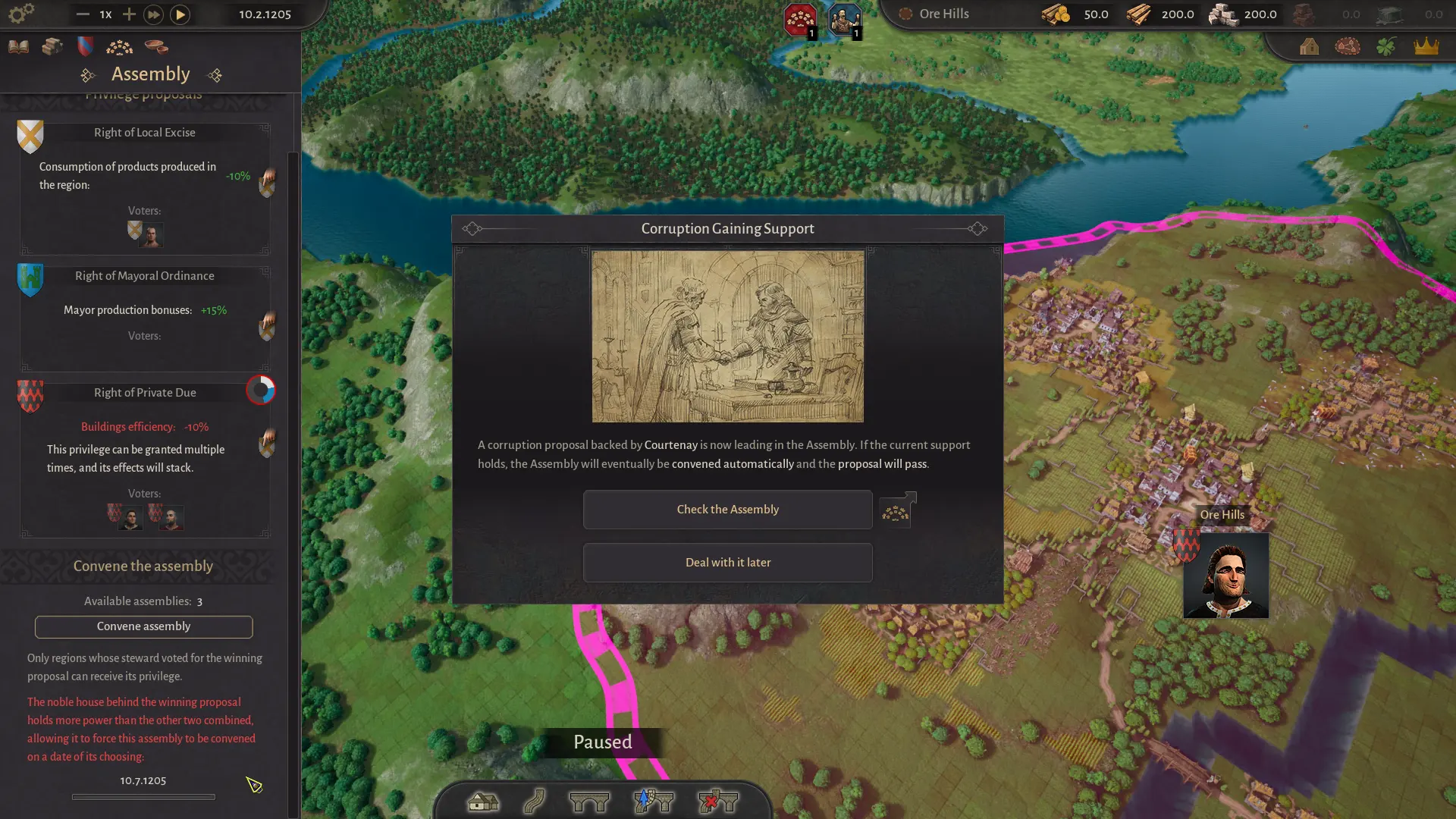
- Ignoring the house. Mayors are political actors, not just modifiers. A dominant house can force an Assembly or shape elections.
- Never swapping. The penalty is gone; if a settlement changes specialisation, change its mayor.
- Hoarding unassigned mayors. An unassigned mayor provides no bonus. Keep the roster lean.
- Blaming the mayor for a supply failure. If the input is missing, the bonus cannot apply. Fix the chain first.
Mayor checklist
- Does the settlement have a clear production role?
- Which buildings dominate its output?
- Does the candidate’s bonus affect those buildings?
- What house does the candidate belong to, and how much influence does that house already have?
- Is the settlement’s input supply stable enough for the bonus to matter?
- Would moving an existing mayor be cheaper or better than hiring?
- After the next election or Assembly, is the appointment still politically sensible?
For the political layer, continue with the noble houses and Assembly guides. For the production side, read the production chains guide.
Quick answers
County of Fortune mayor questions
Do mayors have negative bonuses in County of Fortune?
No. The August 2026 rebalance removed negative mayor bonuses. Mayors now provide positive production bonuses, and swapping them between settlements has no penalty. The goal is to make choosing and moving mayors an interesting decision rather than a punishment.
Can I swap mayors between settlements?
Yes. New and existing mayors appear in the same selection window, and you can move a mayor to another settlement without the old swap penalty. This is the fastest way to fix a mismatched bonus.
Does a mayor’s noble house matter?
Yes. Every mayor belongs to a noble house, and houses compete for influence and votes. A mayor’s house can affect regional elections and Assembly politics, so a slightly weaker mayor from a strategically important house may be worth appointing.
What is the best mayor bonus?
There is no universal best. A food bonus is excellent in a farming settlement and useless in a quarry. Match the bonus to the buildings that dominate the settlement’s output, then consider the mayor’s house and the regional political picture.
Can I have more mayors than settlements?
You can hire mayors without appointing them immediately, but an unassigned mayor provides no production bonus. Prefer a small roster of well-matched mayors over a large collection of unused portraits.