On this page +
Tips & common mistakes
County of Fortune does not punish you with a single dramatic failure. It stalls: a road stops short, a workshop misses one input, a settlement levels up before its food chain is ready. These twenty tips are the habits that keep a county moving.
Opening tips
1. Build a resource cluster, not a masterpiece
Your first four settlements should cover food, logs, carpentry and equipment. A beautiful but isolated town with no carpenter’s guild will not grow. Start with a functional cluster and decorate later.
2. Select a starting building before placing a settlement
The tutorial’s red placement marker often means no starting building is selected in the left panel. Pick a farm, logging camp or quarry first, then place the settlement inside a white circle.
3. Do not settle on stone terrain
Stone deposits can be one or two tiles wide. If the placement is invalid and the surrounding land looks fine, zoom in and check for a grey patch under the settlement footprint.
4. Check the river direction before you build
Rafts move downstream in the demo. A riverside settlement on the wrong stretch cannot send heavy goods to your main region. Look at the flow before you commit to a port.
5. Use the white circles, then ignore them
The white circles are tutorial recommendations, not the only valid sites. After the tutorial, place settlements where the resources and buildable area are, even if the site looks less picturesque.
Logistics tips
6. Connect roads to the yellow market square
A road that reaches the edge of a settlement is not connected. Hover the road tool and look for the yellow highlight at the settlement centre. If the final segment is missing, goods will not move.
7. Hold Shift for diagonal roads
Diagonal roads save distance and look better. The road tool supports straight diagonals with Shift, which is useful for connecting settlements that are not aligned to the grid.
8. Build the bridge before the road
The road tool will not cross water without a bridge. Place the bridge first, then draw the road across it. If a bridge will not fit, the span is too long or the bank is unsuitable.
9. Upgrade the critical road first
Do not stone-pave every path. Identify the route that carries food and construction goods, upgrade that to stone, and leave decorative lanes as dirt. Road maintenance competes with building construction.
10. Build a small market before a raft port
A small market enables land trade and lets a raft port receive overland goods. If you build the port first, you may have a beautiful river terminal with no way to collect goods from the region.
11. Remember heavy goods cannot travel by road
Logs, stone, clay and sand require the river in the demo. If a route shows no movement, check the goods type before you rebuild the road.
12. Use auto-trade first
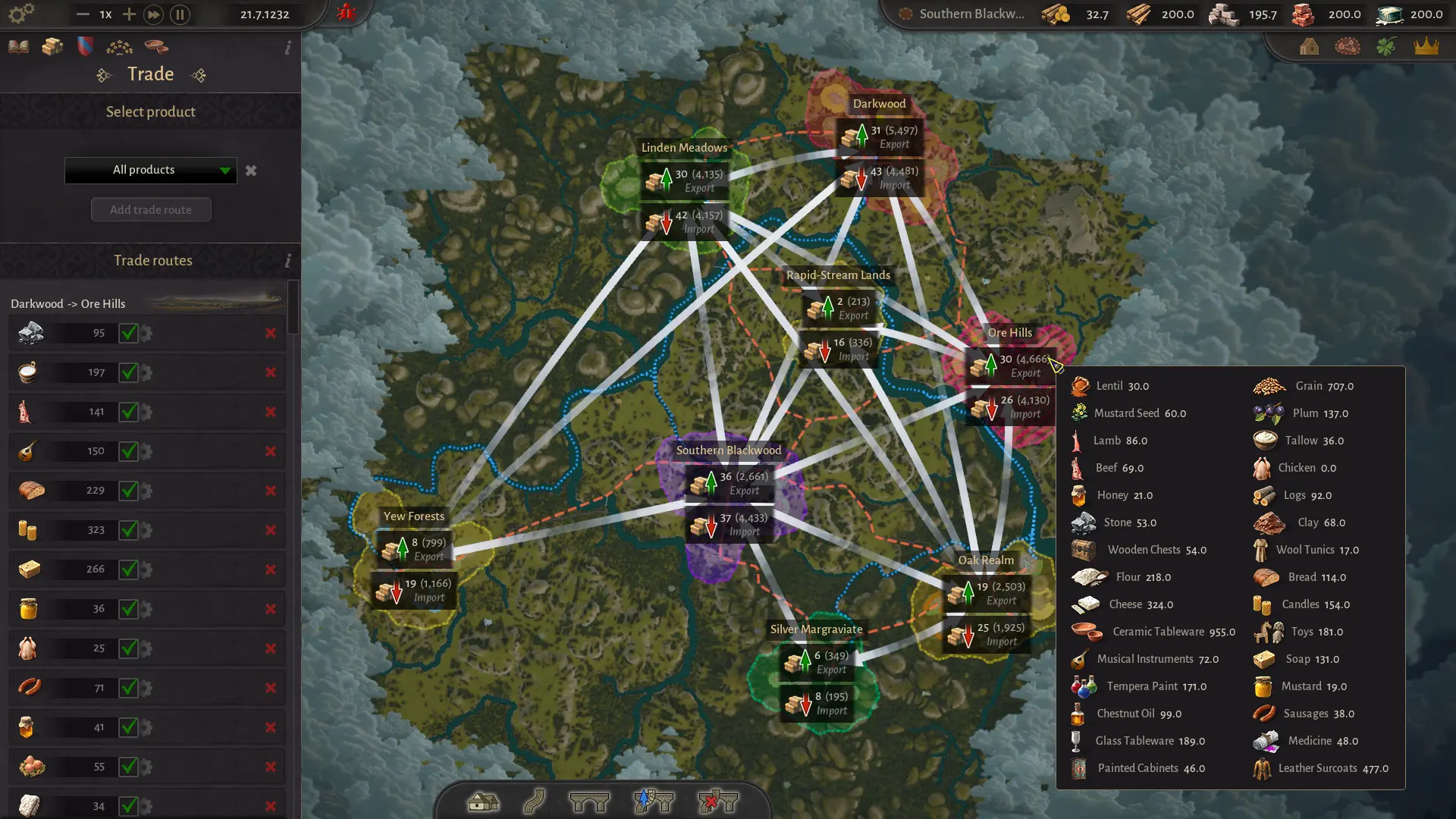
Auto-trade adjusts to demand and is easier to stabilise than a fixed annual volume. Switch to a fixed amount only when you need a guaranteed supply for a specific production chain.
Economy tips
13. Add one need at a time
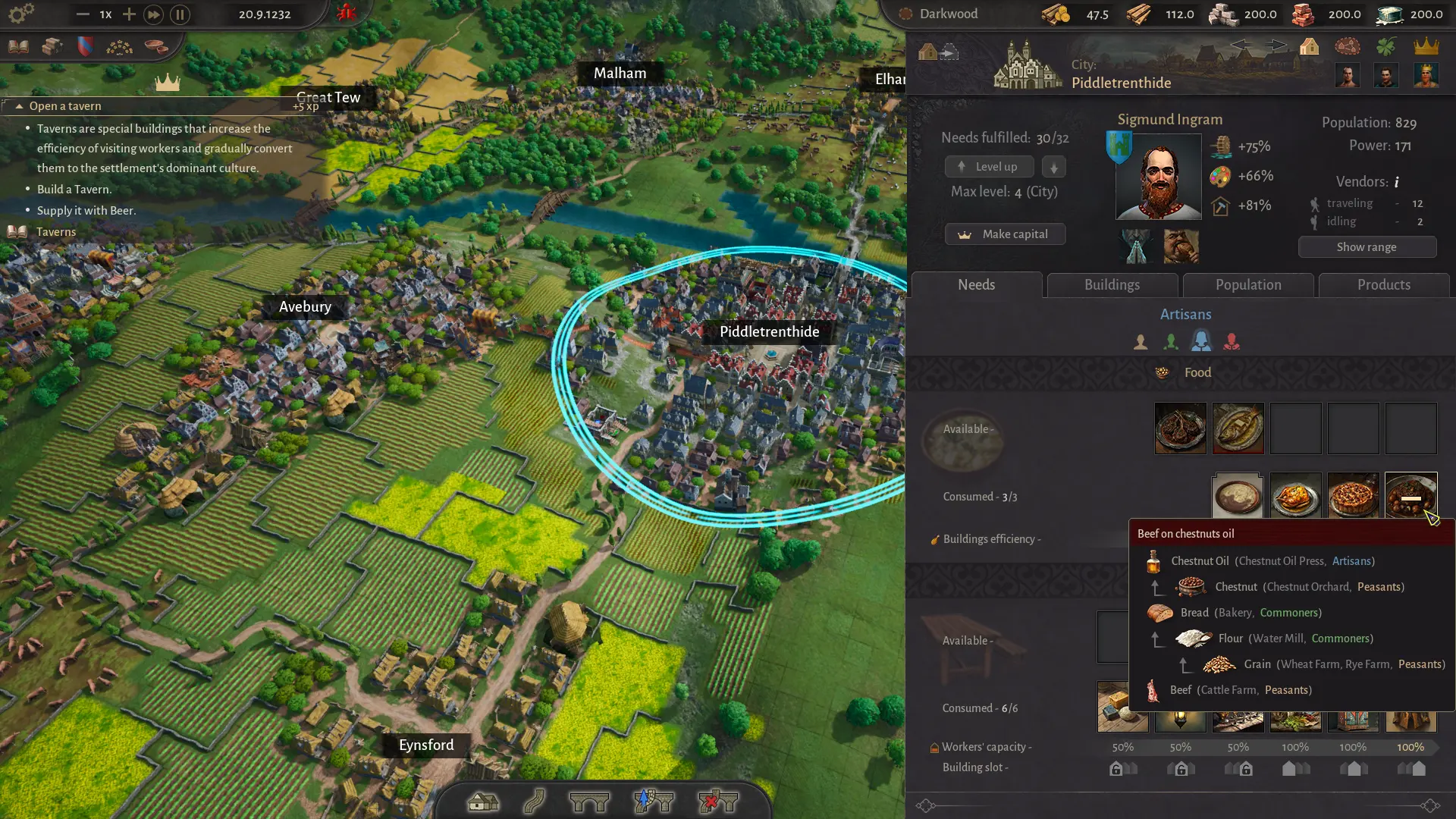
Every new food or equipment need consumes goods and workers. Enable it, wait for the warning icons to clear, then add the next. Five intermittent foods are worse than two reliable ones.
14. Build the input before the workshop
A bakery without a mill, or a mill without grain, is a queue of idle workers. When you plan a workshop, plan its input producer in the same session.
15. Keep carpentry and masonry points positive
Guilds produce the points that build and maintain your infrastructure. If construction stalls, expand the guild or supply more logs/stone before queuing another project.
16. Level down to level up
You can lower a settlement’s level to free supply for another one. In a tight economy, rotating levels is a legitimate way to concentrate scarce goods where they unlock the most value.
17. Specialise around the land
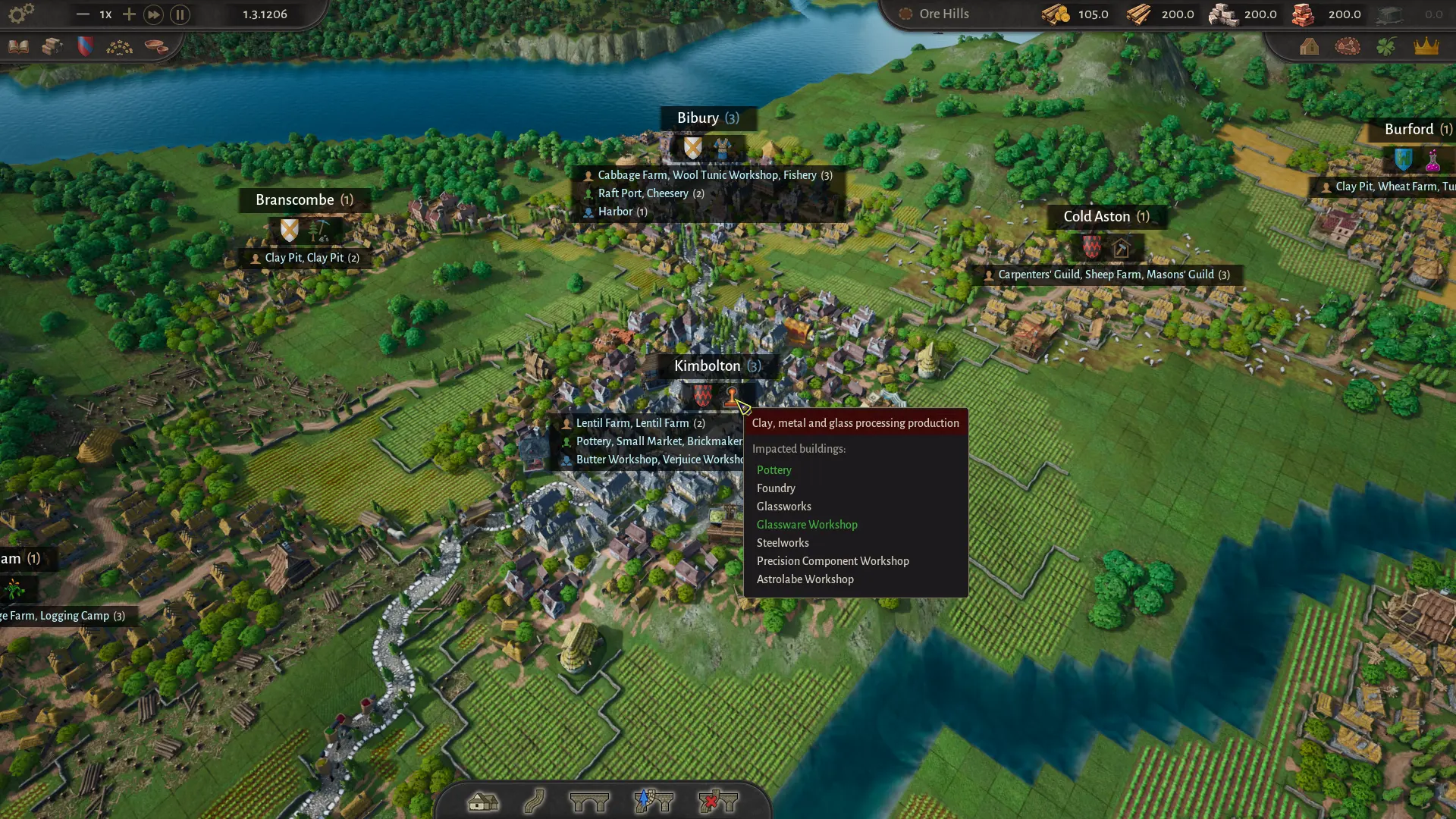
A clay-rich region should make pottery and bricks, not force wheat on poor soil. Specialisation creates trade, and trade makes the county more resilient than a collection of identical towns.
18. Move a bad settlement instead of restarting
Settlements can be moved for free within their region. If a site is blocking growth, move it early rather than abandoning the save.
Politics tips
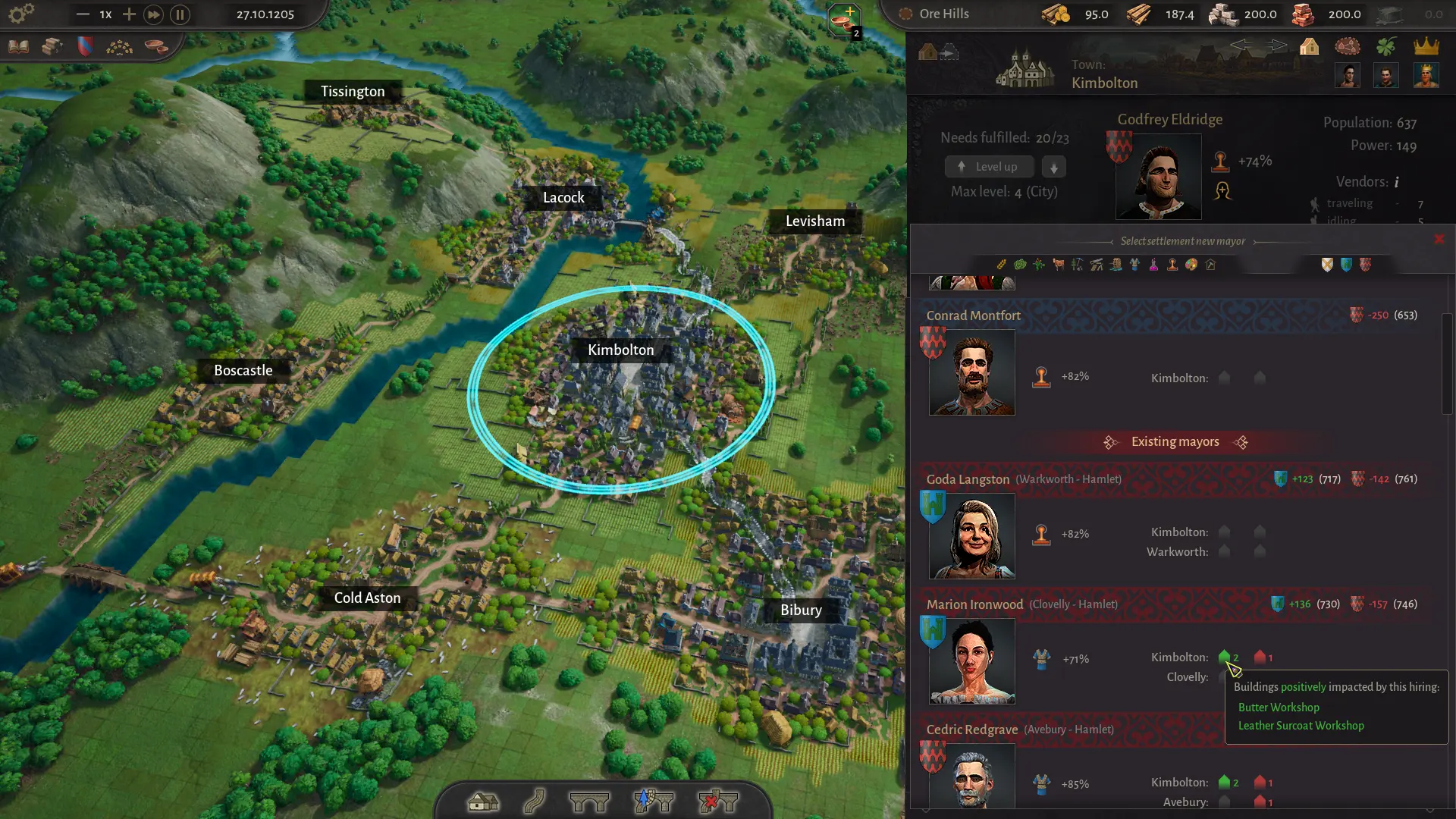
19. Match the mayor to the buildings, not the percentage
A +80% bonus to a building type the settlement does not have is worth nothing. Check the impact list before you hire, and swap mayors when a settlement changes specialisation.
20. Watch the houses behind the mayors
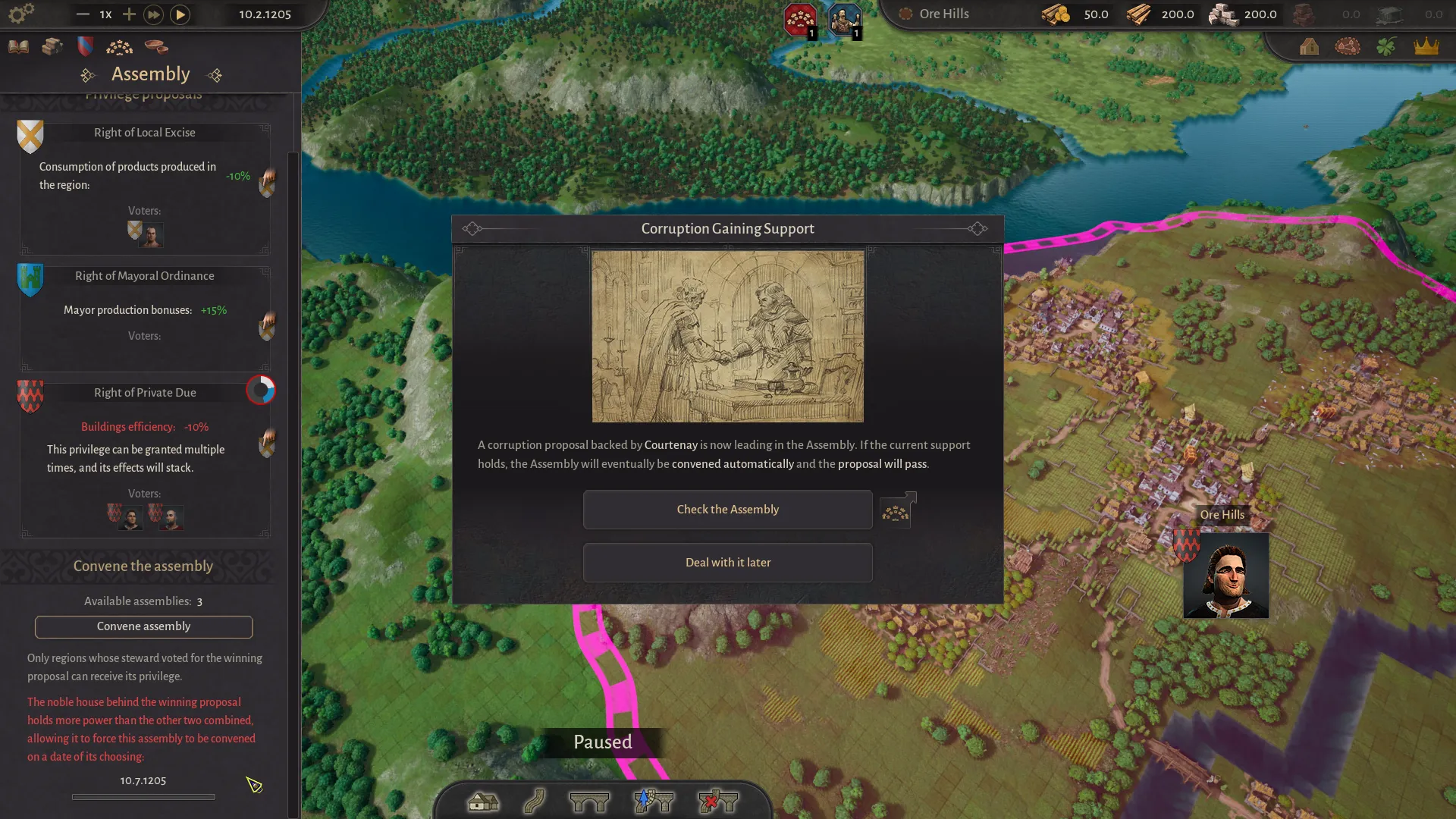
Every mayor belongs to a noble house. A strong economic appointment can also strengthen a house you would rather keep out of power. In the mid-game, read the election and Assembly screens before appointing.
If you cannot explain where a settlement’s food, equipment and construction points come from, do not add another settlement. Fix the explanation first.
Five costly mistakes
| Mistake | Symptom | Recovery |
|---|---|---|
| Expanding before stability | Constant food and equipment shortages | Pause expansion, level one settlement down, fix the core chains |
| Ignoring road connections | Goods pile up in one town | Reconnect the final segment to the market square |
| Building workshops without inputs | Idle buildings with warning icons | Add the input producer or import the missing good |
| Over-upgrading roads | Masonry points drained, construction stalls | Upgrade only critical routes; expand the mason’s guild |
| Appointing mayors by percentage | High bonus, no effect on output | Check the building impact list and swap to a matching mayor |
For a structured walkthrough, read the beginner guide. For the systems behind the tips, use the wiki. If trade is your bottleneck, go straight to the trade routes guide.
Quick answers
County of Fortune tips: questions
What is the biggest mistake new County of Fortune players make?
Expanding too early. A second region, a new settlement or a new need multiplies the number of things that can fail. Stabilise food, equipment, carpentry and stone in the first region before adding another layer.
How do I fix a settlement that is not growing?
Check needs first, then production inputs, then roads. A settlement will not level up with an unmet food or equipment need, and a building cannot produce without its input or workers. The troubleshooting table in the settlements guide walks through the order.
Should I upgrade roads or build more settlements first?
Upgrade the roads on your critical supply route first. A new settlement adds demand; a stone road improves the network you already have. If a road is damaged or over capacity, fix it before expanding.
Is it better to trade or produce everything locally?
Trade, usually. County of Fortune rewards regional specialisation. A settlement with poor soil should import food rather than force a weak farm, and a region with good clay should export pottery. Trying to produce everything everywhere wastes building slots.